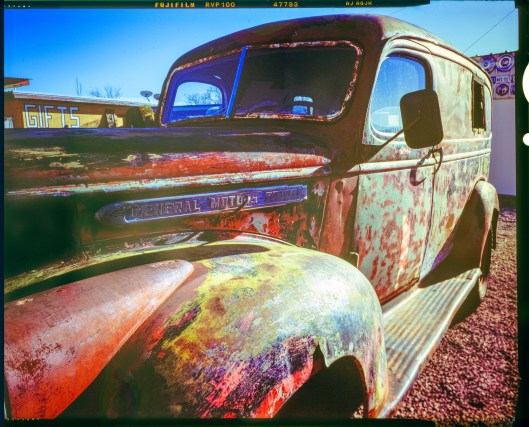
Taken on 4×5 transparency film.
10 Wednesday Feb 2016
Posted in "photography", Film Cameras, film photography, Travel, Uncategorized
Taken on 4×5 transparency film.
09 Tuesday Feb 2016
Posted in "photography", Film Cameras, film photography, Travel, Uncategorized
Tags
"photography", 4x5 camera photography, black and white, black and white film, cemetery, film, film camera, film photography, graveyard, large format photography, terlingua texas, view camera photography, west texas, wooden crosses
We were in Terlingua, Texas, just outside Big Bend National Park. This is where a big chili cook off happens once per year. I’m not sure exactly when it is. My father went once and slept under the bus. Anyway, I was looking for an excuse to waste a sheet of Fomapan 100 4×5 sheet film, so here was something Ansel Adamsish enough to make me happy. It was my first shot with a large format camera in a couple of years or more, so after setting up the camera, which meant assembling it on the tripod, composing, focusing, guessing which part of the image I would place on Zone III, reading the settings off the spot meter, setting them on the lens, cocking the lens and closing the shutter, placing the holder under the ground glass, removing the slide, firing the shot, replacing the slide and then the holder, driving home 600 miles, processing in trays, copying with the D800, editing, here is what I got:
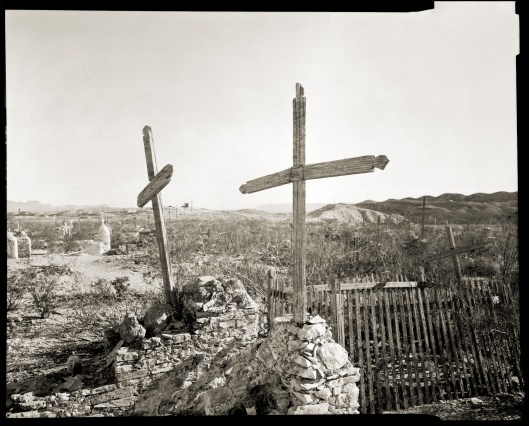
I tried to give it a tint that I would aim for if I were to make a palladium print of the image. I think the warm tone suits the subject. I have 4 more negatives to look at. However, I just may make myself wait to make the silver prints in the darkroom to see them!
08 Monday Feb 2016
Posted in "photography", Film Cameras, film photography, Uncategorized
Tags
"photography", black and white, cameras, canon eos 3, film, film camera, film photography, hand held camera, kodak black and white film, kodak film, monochrome, still life
Canon EOS 3 with Canon EF 50mm f2.5 macro lens on Kodak TMax 400 developed in Ilford Ilfosol 3. Scanned with Nikon D800 and 60mm Micro Nikkor.
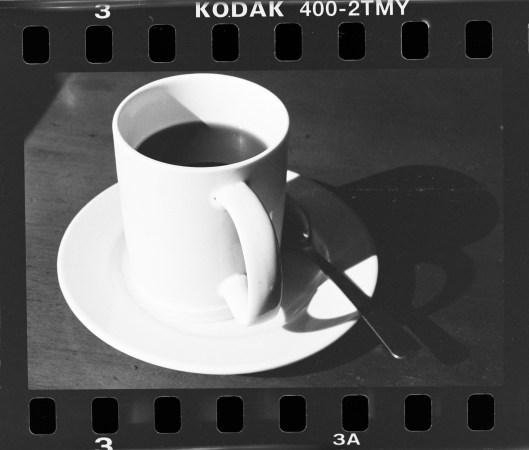
Supposedly Ilford DD-X is designed for the faster films and Ilfosol 3 for finer grain slower films, but this doesn’t seem to have suffered. I would imagine that in making a silver print I will go with a 3 1/2 contrast filter in the drawer.
05 Friday Feb 2016
Posted in "photography", Uncategorized
In an effort to find an area to write about that has to do with a passion of mine, I’ve finally realized that photography is it. I have a site for Big Bend National Park and there is a lot of overlap with photography, but sometimes there are topics that I’d like to cover that aren’t Big Bend in their content but that do involve making images.
Here I hope to share my experiences and learn from those of others. I’ve run a wide gamut of camera and darkroom experiences over the decades, using APS up to 8 x 10 film and of course I’ve enjoyed the many unique advantages of digital cameras in more recent years. I currently do actually have film facilities again with many “vintage” Nikon cameras, some of which just a few years ago I couldn’t have dreamt of owning but now can, of course, be picked up for a fraction of their original costs on a popular site for dumping our items no longer wanted.
This aggregation of camera bodies and lenses is partly for the enjoyment of putting together a display of the beautiful machines. They are on shelves for looking at. I finally have my own camera store after all. There is now a Hasselblad system with 5 lenses and 3 bodies. There is a Sinar 4×5 with 4 lenses and an old, heavy Cambo 8×10 camera with a Caltar Universal Synchro 375mm lens permanently attached that you don’t even have to reset the shutter to fire.
I’ll post pictures of the equipment as time goes by, but for now what matters most is the darkroom side and that is up and running as well. In addition. there is the material and hardware now at hand to do platinum/palladium alternative processing.
Digital will of course not go away, but it’s nice once again to have a physical presence to an image, not just an electronic representation that may just go away at the drop of an external drive.
I’m about to go develop a roll of HP5 Plus 135 then some sheets of Fomapan 100 4×5. Wish me luck and I’ll let you know how it turned out!
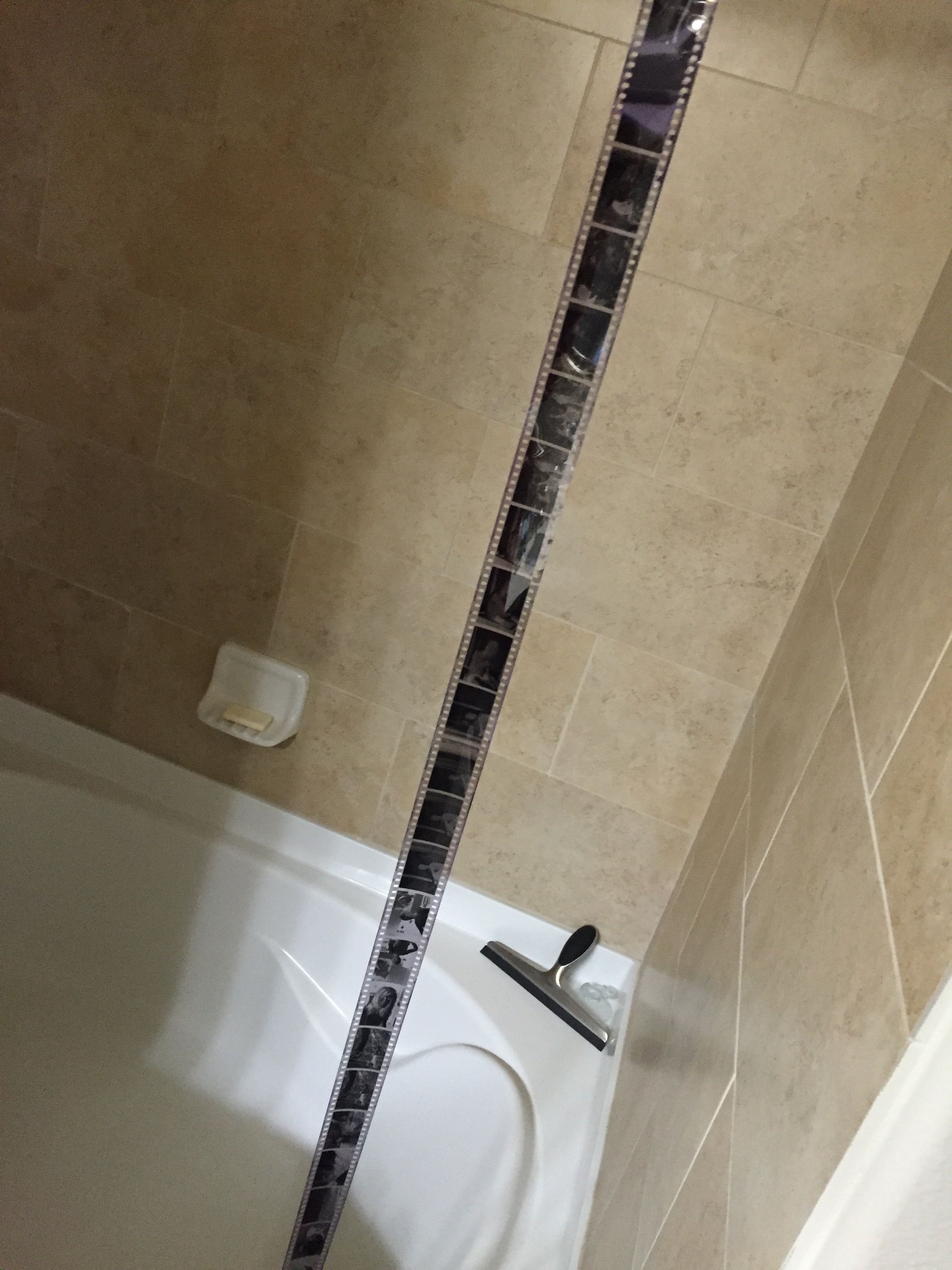
So here are the 35mm negatives. The film was shot in a Canon EOS 3, a remarkable camera whose AF system seemingly reads your mind. I thought I was shooting Ilford HP5 Plus, but it turned out to be Kodak TMax 400. Right ISO, wrong brand. I think they’re OK except for the 3 or 4 places where the film touched together on the stainless steel reels. I knew I would have some of that, but most of the pictures are quite usable it seems. From now on I use 24 exposure rolls as it gets loaded onto the reel faster and there’s less chance of misloads. C’est la vie.